











Testimonials

We Win or You
Pay Nothing
We have staff standing by at all hours to help you.
Immediate
Medical Care
Receive the treatment you need, as soon as you need it, with usually no out-of-pocket cost to you.
24/7
Access to Us
Speak with a real human being, no matter what time it is.
Client
Satisfaction
Enjoy working alongside a firm with a sterling reputation for 1,400+ 5-Star Google Reviews.
What To Do After a Truck Accident in New Orleans
The moments after a truck accident can be confusing. Emergency responders may be treating injuries, traffic may be backed up for miles, and trucking companies or insurance representatives may begin gathering information soon after the collision.
Although every situation is different, taking a few practical steps afterward can help protect your health and preserve important information about what occurred.
After a truck accident in New Orleans, consider:
- Calling 911 if anyone is injured or the vehicles cannot be moved safely. Louisiana state law requires drivers to immediately contact the police if an accident results in injury, death, or damage over $500.
- Exchanging driver’s license, insurance, employer, and commercial vehicle information with the truck driver.
- Taking photographs of vehicle damage, roadway conditions, truck markings, trailer numbers, cargo, and any debris left at the scene.
- Collecting names and contact information for any witnesses before they leave.
- Seeking medical evaluation promptly, even if you don’t immediately feel injured.
- Keeping medical records, repair estimates, receipts, and other accident-related documents.
- Avoiding recorded statements or conversations about fault before you fully understand the circumstances surrounding the collision.
- Speaking with a New Orleans truck accident lawyer if the crash resulted in significant injuries or complicated insurance issues.
Unlike in many passenger vehicle crashes, important evidence in a truck accident may never be visible at the scene. Driver logs, maintenance records, electronic logging device (ELD) data, dispatch communications, inspection reports, and cargo documentation may all become relevant as the claim develops.
For additional guidance about the steps to take after a collision, visit our What To Do After a Truck Accident FAQs.
Filing an Accident Report After a New Orleans Truck Accident
An official accident report can become an important part of documenting how a truck accident occurred.
Louisiana law generally requires drivers to report crashes involving injuries, fatalities, or significant property damage. When law enforcement responds, the investigating officer will prepare an official crash report that identifies the parties involved, documents the vehicles, and records observations about the collision.
Depending on where the accident occurs, the responding agency may include the New Orleans Police Department, the Louisiana State Police, the Jefferson Parish Sheriff’s Office, or another local law enforcement agency.
Not every crash receives the same response, however. If a truck accident results in only property damage or emergency resources are stretched thin, officers may be delayed or may not respond to the scene immediately. If that happens, you should still contact the appropriate law enforcement agency afterward to determine whether additional reporting is required or how to obtain any available documentation.
If you’ve been involved in a serious truck accident and aren’t sure what steps to take next, Trust Guss Injury Lawyers is available 24/7 to answer your questions during a free consultation.
Get Your Free Case Evaluation














Our Reputation Is Built on
Real Truck Accident Results
A successful truck accident claim isn’t determined by the severity of a collision alone. It often depends on how thoroughly the case is developed, how clearly the evidence supports the client’s position, and whether the full impact of the injuries is properly documented.
At Trust Guss Injury Lawyers, we’ve spent more than 25 years representing people whose lives were changed by serious motor vehicle accidents. While no two cases are alike – and every outcome depends on its own facts – we’re committed to giving every client the attention and preparation their case deserves.
Visit Our New Orleans Law Office in the Central Business District
Trust Guss Injury Lawyers proudly serves clients from our New Orleans office at 400 Poydras Tower, located in the heart of the Central Business District. Whether you’re traveling from New Orleans, Metairie, Kenner, Gretna, Harvey, Marrero, Chalmette, or another nearby community, our office offers a convenient place to meet with our legal team.

New Orleans Wasn’t Built for Modern Truck Traffic
Long before today’s commercial trucking industry existed, New Orleans was designed around the Mississippi River, dense neighborhoods, and a street network that still shapes how people move throughout the city today.
As freight activity has grown, tractor-trailers, container trucks, tanker trucks, and delivery vehicles have become a regular part of that landscape. Many of these vehicles travel between the Port of New Orleans, nearby industrial facilities, regional warehouses, and major highways, often sharing the road with commuters, tourists, transit buses, cyclists, and pedestrians.
Several characteristics of New Orleans can create additional challenges for large trucks and the people driving around them:
- Historic streets and intersections that offer less room for oversized vehicles to maneuver
- Heavy truck traffic traveling between the Port of New Orleans and regional freight corridors
- Congestion along major routes such as I-10, US-90 (Pontchartrain Expressway), and the Crescent City Connection
- Busy entertainment districts where rideshare vehicles, pedestrians, delivery trucks, and passenger traffic frequently converge
- Ongoing road construction, flooding concerns, and changing traffic patterns that can affect visibility and traffic flow
None of these conditions automatically leads to a collision. They do, however, create an environment where operating a large commercial vehicle requires constant attention, careful planning, and an awareness of the people sharing the road.
How Our New Orleans Truck Accident Lawyers Can Help With Your Claim
The period after a truck accident often raises as many questions as answers. You may be trying to understand how the collision happened, who may be responsible, what insurance policies apply, and whether the information collected at the scene tells the complete story.
Our New Orleans truck accident attorneys work to develop a clear understanding of each case by:
- Reviewing crash reports and available documentation
- Identifying all individuals and businesses that may have contributed to the collision
- Requesting trucking company records when appropriate
- Examining driver qualification files, maintenance records, and inspection histories
- Analyzing electronic logging device (ELD) data and other available vehicle information
- Communicating directly with insurance companies on your behalf
- Working with accident reconstructionists or other experts when additional analysis is warranted
- Preparing every case with litigation in mind, if a fair resolution cannot be reached through negotiation
Rather than relying on assumptions, we focus on developing a well-supported claim that reflects both what happened and how the accident has affected your life. To learn more about the legal process, explore our Truck Accident Legal Process FAQs.
What Compensation May Be Available After a New Orleans Truck Accident
The effects of a truck accident are rarely limited to the damage you can see immediately after the collision.
Medical treatment may continue for weeks, months, or even years. Some people are unable to return to work right away, while others face lasting physical limitations that affect their earning capacity and day-to-day lives.
If another party’s negligence caused the accident, your claim may include compensation for losses such as:
- Emergency medical care
- Ongoing medical treatment
- Rehabilitation and physical therapy
- Lost wages
- Reduced earning capacity
- Property damage
- Pain and suffering
- Mental anguish
- Permanent disability or disfigurement
- Wrongful death damages, when applicable
No two truck accident claims have the same value. The outcome often depends on factors such as the severity of your injuries, the medical treatment required, the insurance coverage available, and the overall impact the collision has had on your life.
To learn more about how damages are evaluated, visit our Truck Accident Compensation & Settlement FAQs.
Looking Beyond the Truck Driver When Determining Responsibility
It’s easy to assume the driver is the only person responsible after a truck accident. In reality, commercial trucking operations often involve multiple companies, contractors, and service providers, each with their own responsibilities.
Depending on what contributed to the collision, responsibility may extend to:
- The truck driver, if negligent driving played a role (such as speeding, distracted driving, fatigue, or impairment)
- The trucking company or motor carrier, for hiring, supervision, maintenance, or safety-related decisions
- A cargo loading company, if improperly secured or overloaded cargo contributed to the crash
- A maintenance provider, if preventable mechanical problems affected the truck’s safe operation
- A manufacturer, if a defective component or vehicle system contributed to the accident
Louisiana follows a pure comparative fault system, meaning more than one party can share legal responsibility for a collision. Generally, the more fault you share, the less compensation you are likely to recover.

Understanding Insurance Challenges After a New Orleans Truck Accident
Insurance claims involving commercial trucks can be more complicated than claims involving two passenger vehicles.
Instead of a single personal auto policy, a truck accident may involve multiple insurance carriers or commercial policies covering different businesses connected to the vehicle.
Depending on the circumstances, available coverage may include:
- Commercial automobile liability insurance
- Motor carrier liability coverage
- Employer liability insurance
- Umbrella or excess liability policies
- Additional insurance maintained by contractors or third-party businesses
Insurance companies generally review many of the same issues after a truck accident: how the collision occurred, who may be legally responsible, the extent of the injuries, and what coverage applies. When multiple policies or businesses are involved, reaching those conclusions can take additional time.
Understanding which policies may apply – and how they interact – is often an important step in evaluating a commercial truck accident claim.
Learn more by exploring our Truck Accident Insurance Claims FAQs.
Who You
Trust Matters
Trust Matters
See Why New Orleans Trusts Guss
Trust Guss Injury Lawyers has over 1,400 Five Star Google Reviews from satisfied clients. Every case is different. Every story is unique. Hear from these actual clients what they experienced and why they now Trust Guss.1,400+
Five-Star Google Reviews from Satisfied Clients

New Orleans Truck Accident Statistics and Trends
Commercial trucks make up a relatively small percentage of the vehicles involved in Louisiana crashes, but they are involved in a disproportionate number of the state’s most serious collisions. According to LSU’s Center for Analytics & Research in Transportation Safety (CARTS), large trucks and buses accounted for just 7.2% of the vehicles involved in Louisiana’s fatal crashes in 2024. Yet 77.0% of all fatal crashes involved at least one large truck or bus.
In Orleans Parish, CARTS reported these numbers for 2024:
- 2 fatal commercial motor vehicle crashes
- 158 injury crashes involving commercial motor vehicles
- 103 property-damage-only (PDO) commercial motor vehicle crashes
Leading Causes of Truck Accidents in New Orleans
Every truck accident has its own set of circumstances, but certain contributing factors appear more frequently than others. Identifying what led to a collision can be an important part of determining liability and evaluating how the accident occurred.
Some of the most common causes of truck accidents in the New Orleans area include:
- Driver fatigue, including violations of federal hours-of-service regulations
- Distracted driving, such as using a phone or in-cab technology while operating a commercial vehicle
- Speeding or driving too fast for conditions, particularly in congested traffic or poor weather
- Pedestrian traffic (state-wide in 2024, pedestrian deaths accounted for 21% of all traffic fatalities)
- Improper lane changes and failure to check blind spots before merging
- Unsafe following distances, reducing the time available to stop in traffic
- Mechanical failures, including brake, tire, steering, or lighting problems
- Inadequate driver training or supervision by the trucking company
- Driving under the influence of alcohol, drugs, or certain prescription medications – nearly 30% of fatal accidents in New Orleans involved impaired driving in 2024
While a single factor may be responsible for some crashes, many truck accidents result from a combination of driver decisions, vehicle condition, roadway conditions, and operational practices.
Common Types of Truck Accidents in New Orleans
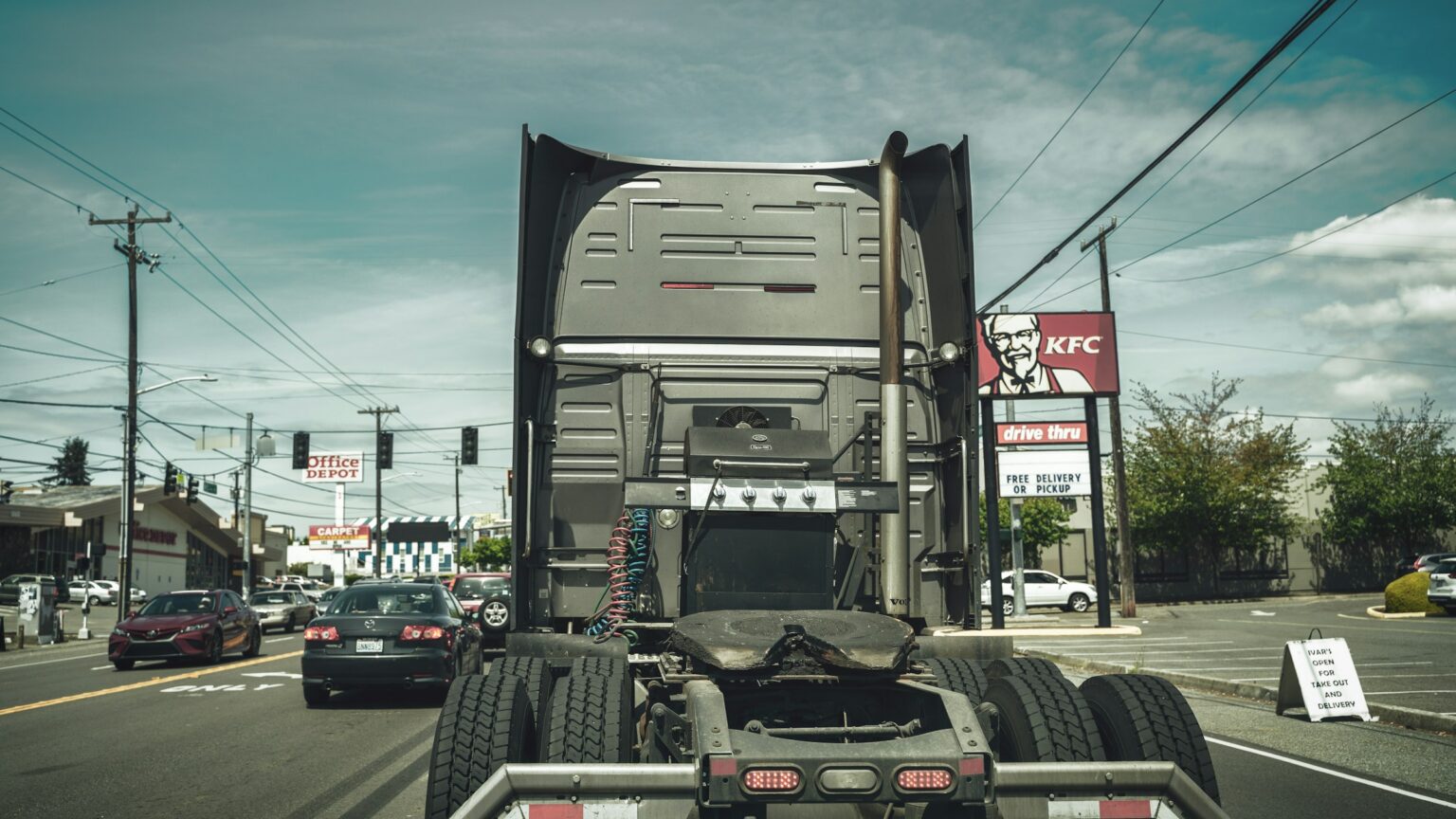
Commercial trucks can be involved in many different types of collisions depending on traffic conditions, roadway design, and the movement of surrounding vehicles.
Some of the most common include:
- Jackknife accidents, where the trailer swings away from the tractor and blocks one or more lanes of traffic
- Rear-end collisions, often resulting from the longer stopping distances required for fully loaded trucks
- Wide-turn accidents, when a truck needs additional space to complete a turn and collides with a nearby vehicle
- Underride accidents, where a passenger vehicle slides beneath the side or rear of a truck or trailer
- Override accidents, where a commercial truck rides over a smaller vehicle during the collision
- Cargo-related accidents, involving shifting loads or debris falling into the roadway.
- Rollover accidents, which may occur because of excessive speed, sudden steering inputs, or unstable cargo
- Hazardous materials incidents, involving trucks transporting fuel, chemicals, or other dangerous cargo
Understanding the type of collision can help explain why certain injuries occurred and what information may become important when evaluating the claim.
Common Injuries After a New Orleans Truck Accident
Because of the size and weight of commercial trucks, collisions often result in injuries that require extensive medical treatment and lengthy recovery periods.
Some of the injuries frequently associated with truck accidents include:
- Traumatic brain injuries (TBIs)
- Concussions
- Neck injuries and whiplash
- Back injuries and herniated discs
- Spinal cord injuries
- Broken bones
- Internal injuries
- Crush injuries
- Severe burns
- Soft tissue injuries
- Amputations
- Wrongful death
The full extent of an injury isn’t always apparent immediately after a collision. Some conditions may worsen over time or require ongoing treatment, making it important to follow medical recommendations and continue receiving appropriate care throughout your recovery.
Results That Matter:
k+
Drivers helped after car accidents.
k+
Clients Helped.
+
Over 25 years of helping drivers with car accidents.
Frequently Asked Questions About New Orleans Truck Accidents
Your first priority should always be your health and safety. Call 911 if anyone is injured, seek medical attention as soon as possible, and follow any instructions provided by emergency responders.
If you’re able, gather information about the truck, its driver, and any witnesses, take photographs of the scene, and keep copies of medical records and other accident-related documents. These steps can make it easier to understand what happened and support your claim later on.
Some truck accident injuries are immediately apparent, while others may not produce noticeable symptoms until hours or even days later.
Seeking prompt medical evaluation can help identify injuries early, ensure you receive appropriate treatment, and create medical documentation that accurately reflects your condition following the accident.
The answer depends on several factors, including the insurance policies available, who was responsible for the collision, and the type of medical coverage you carry.
In some situations, your own health insurance or other available coverage may help pay medical expenses while a liability claim remains pending. Because every case is different, it’s important to understand what options may be available based on your individual circumstances.
There’s no universal timeline.
Some claims resolve within a matter of months, while others take considerably longer if liability is disputed, multiple parties are involved, or the injuries require ongoing treatment before damages can be fully evaluated.
Rather than focusing on speed alone, it’s often important to ensure the full extent of your injuries and losses is understood before making decisions about settlement.
Not every accident requires legal representation. However, truck accident claims frequently involve commercial insurance policies, federal trucking regulations, corporate defendants, and damages that extend well beyond vehicle repairs.
Speaking with an attorney can help you better understand your legal rights, what to expect during the claims process, and the options available based on your particular situation.
Hear Directly From Trust Guss Injury Lawyers





Talk With a New Orleans Truck Accident Lawyer Today
Recovering from a serious truck accident can leave you with difficult questions about your health, your finances, and what comes next. While no attorney can erase what happened, having experienced guidance can make it easier to understand your options and make informed decisions throughout the legal process.
For more than 25 years, Trust Guss Injury Lawyers has represented individuals and families affected by serious motor vehicle accidents. If you were injured in a New Orleans truck accident, our team is available 24 hours a day, seven days a week to listen to your story, answer your questions, and discuss your case during a free consultation.
Get Your Free Case Evaluation